Contouring by Face Shape: Where It Goes and Which Formula to Use
Where contour actually goes changes based on face shape — rounder faces contour to add angles, longer faces contour to add width, and the goal in every case is the same: use shadow to visually correct a proportion the face doesn't already have. Which formula to reach for — stick, cream, or powder — is a separate decision based on skin type and how much blending time you have, not a question of which one is objectively "better."
Contour placement by face shape
Round face: the goal is to add angles and length, not more width. Contour goes along the outer edges of the cheeks from temple to jaw, under the cheekbones, and lightly at the hairline — not swept straight across the cheek, which only adds more roundness.
Square face: the goal is to soften sharp corners rather than sharpen them further. Contour goes at the temples and along the corners of the jawline specifically, visually rounding off the angles instead of emphasizing them.
Long or oblong face: the goal is to add width and visually shorten the face. Contour goes at the top of the forehead near the hairline and along the chin, with cheekbone contour kept more horizontal than angled — angling it downward only elongates the face further.
Heart face (wider forehead, narrower chin): contour goes at the temples and forehead to narrow that width, with little to no jaw contour needed since the chin is already the narrowest point. Diamond face (wide cheekbones, narrower forehead and chin): contour goes directly on the cheekbone points to soften that width, with a touch of shadow at the forehead and chin to balance the rest of the face out. Oval face doesn't need strong correction either way, which is why it's treated as the default — the classic temple-to-cheekbone-to-jaw placement works without much adjustment.
Golden Opera Red Lip in the library is built around exactly this kind of placement — its product notes call for sweeping "deep contour under the cheekbones and along the sides of the nose" as part of the look's "maximum dimension." Face shape determines where that contour line sits more than which look you pick; it's a technique layered on top of a look, not a reason to choose a different one.
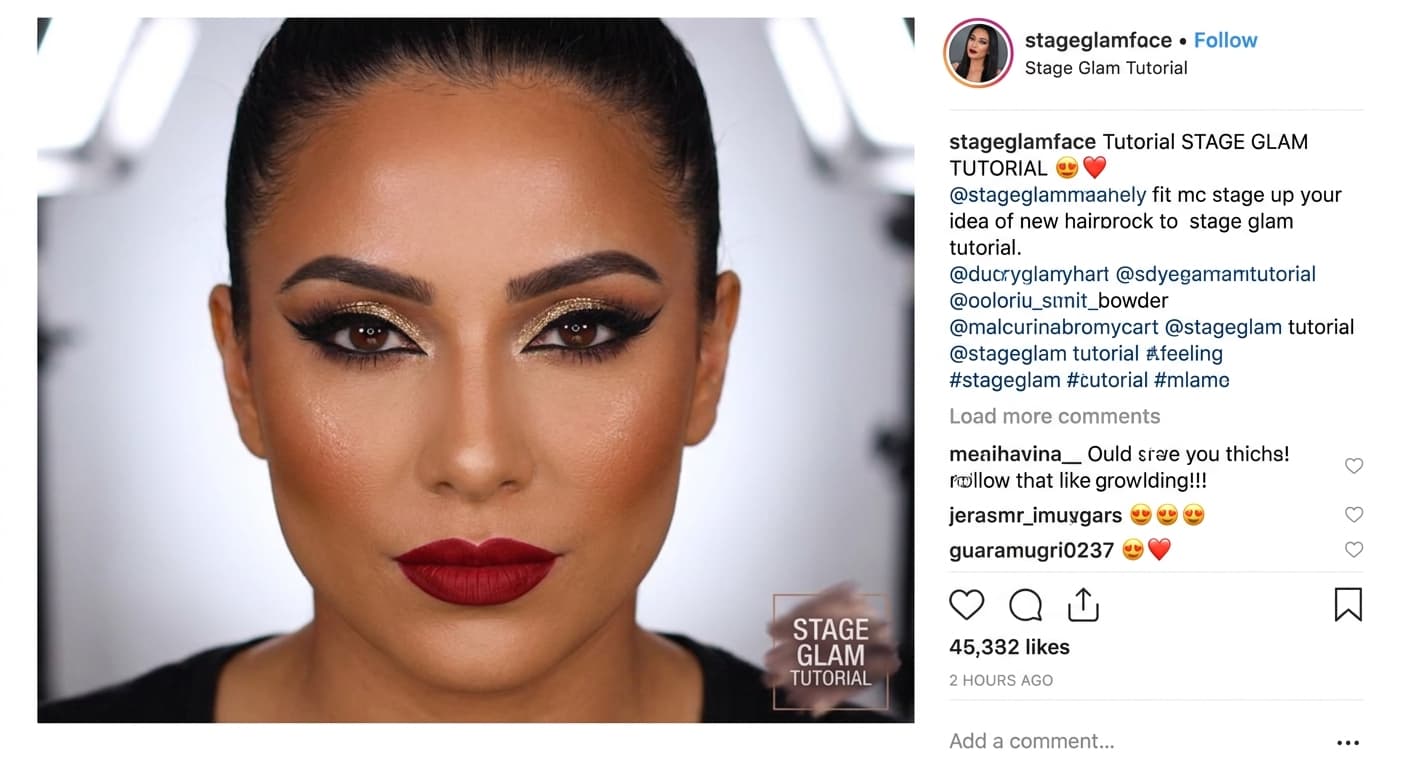
Regal, icy stage queen
Best for: stage performance · gala · Advanced
Try This Look →Stick, cream, or powder — a skin-type decision, not a quality one
Powder contour is the most buildable format for defined, high-contrast sculpting that needs to read clearly, which is why it shows up in looks meant to hold up under strong lighting or at a distance — Golden Opera Red Lip calls for a "contour powder" specifically, in a "taupe & warm bronze duo," describing it as "essential for deep facial sculpting and stage-ready dimension." Powder also tends to hold up better on oily skin through the day than cream or stick formulas do.
Cream contour blends into a softer, more skin-like finish than powder, which is generally favored for everyday or soft contour rather than stage-level definition — it needs more blending time to avoid looking patchy, and isn't as buildable for intense depth. Stick contour applies similarly to cream but in a more travel-friendly, precise format, convenient for on-the-go touch-ups, though a firmer stick formula can sit less naturally on very dry or textured skin without extra blending.
None of the three is the correct default — oily skin generally holds contour longer in powder form, dry skin generally looks more natural with cream or stick blended into an already-hydrated base, and how much definition a specific look calls for matters as much as skin type does.
See how contour placement reads on your own face shape first
Face shape and lighting affect how contour reads more than almost any other product decision, since the whole point is creating a shadow where one doesn't naturally fall. Pick Golden Opera Red Lip from the library to see its real taupe-and-bronze powder contour applied for stage-level definition, or upload a reference photo of a softer contour look, and see the placement on your own face shape before deciding where to actually sweep product.
Every result comes with a step-by-step tutorial and the product categories used. First three tries are free, no signup required.
Looks mentioned in this article
See it on your own photo — free, no signup required.
Try AI Makeup On Your PhotoFAQ
Where does contour go on a round face?
Along the outer edges of the cheeks from temple to jaw, under the cheekbones, and lightly at the hairline — the goal is to add angles and length rather than width, which a round face already has plenty of.
Where does contour go on a square face?
At the temples and along the corners of the jawline, to visually soften the sharp angles rather than sharpen them further.
Is contour stick or powder better?
Neither is better across the board — powder blends easily and builds well for defined, high-contrast looks, cream gives a softer, more skin-like finish suited to everyday contour, and stick is the most convenient for precise placement on the go. Skin type and how much definition a look calls for matter more than which format is "best."